
Business Continuity
Backup and Disaster Recovery
Protect critical data, restore systems faster, and keep operations moving after ransomware, equipment failure, accidental deletion, cloud-service disruption, or severe weather.
QTS designs backup and recovery strategies around the systems your organization depends on and how quickly those systems must return.
Recovery Planning
Know What Must Recover and How Quickly
We identify your critical systems and define how much data loss and downtime your business can tolerate.
Recovery point objective
How much data can you afford to lose?
Determines how frequently critical data should be backed up.
Recovery time objective
How quickly must systems return?
Determines how long critical services can remain unavailable.
What We Protect
Protection Matched to the Workload
A single backup method cannot protect every part of a modern business equally. QTS selects the appropriate protection and recovery approach according to the type of system, how frequently the information changes, its operational importance, and the time available for recovery.
Cloud application data
Protect supported email, collaboration files, cloud records, and business information from accidental deletion, corruption, malicious activity, and limited native retention.
Endpoints and business files
Protect important files and folders stored on laptops, desktops, remote devices, and supported business systems through automated backup and flexible restoration.
Servers and virtual machines
Protect complete system images, including operating systems, applications, configurations, and data, to support full-system restoration after equipment or operating-system failure.
Critical business workloads
For systems that cannot tolerate extended downtime, QTS can design stronger recovery options based on the organization's infrastructure, dependencies, and recovery targets.
Available protection and recovery capabilities are determined by the systems being protected and the requirements agreed during the assessment.
Our Process
How We Build Recovery Readiness
We assess what matters, apply the right protection, and test the recovery path before an incident occurs.
ASSESS
Understand your environment
We identify the systems, data, applications, and dependencies your business relies on.
PROTECT
Apply the right protection
We configure backups, off-site copies, retention controls, monitoring, and recovery options around your requirements.
VALIDATE
Test your recovery
We monitor backup activity, validate recovery points, document procedures, and perform scheduled recovery tests.
Layered Protection
More Than One Path Back
Reliable recovery should not depend on one device, one location, or one copy of your data.
QTS uses layered protection that can combine automated backups, off-site copies, immutable retention, monitoring, and tested restoration according to the organization's recovery requirements.
Multiple copies. Separate locations. Protected recovery points. Verified restoration.
The traditional 3-2-1 approach keeps three copies of critical data across two storage types, with one copy maintained off-site. Modern recovery planning strengthens that model with immutable protection and restore verification.

AUTOMATED BACKUPS
Protection That Runs on Schedule
Backup schedules and retention settings are configured according to how frequently information changes and how much recent data the organization can afford to lose. Monitoring helps identify unsuccessful, incomplete, or overdue backup activity before it affects recovery readiness.
Recovery Validation
A Successful Backup Is Not Proof of Recovery
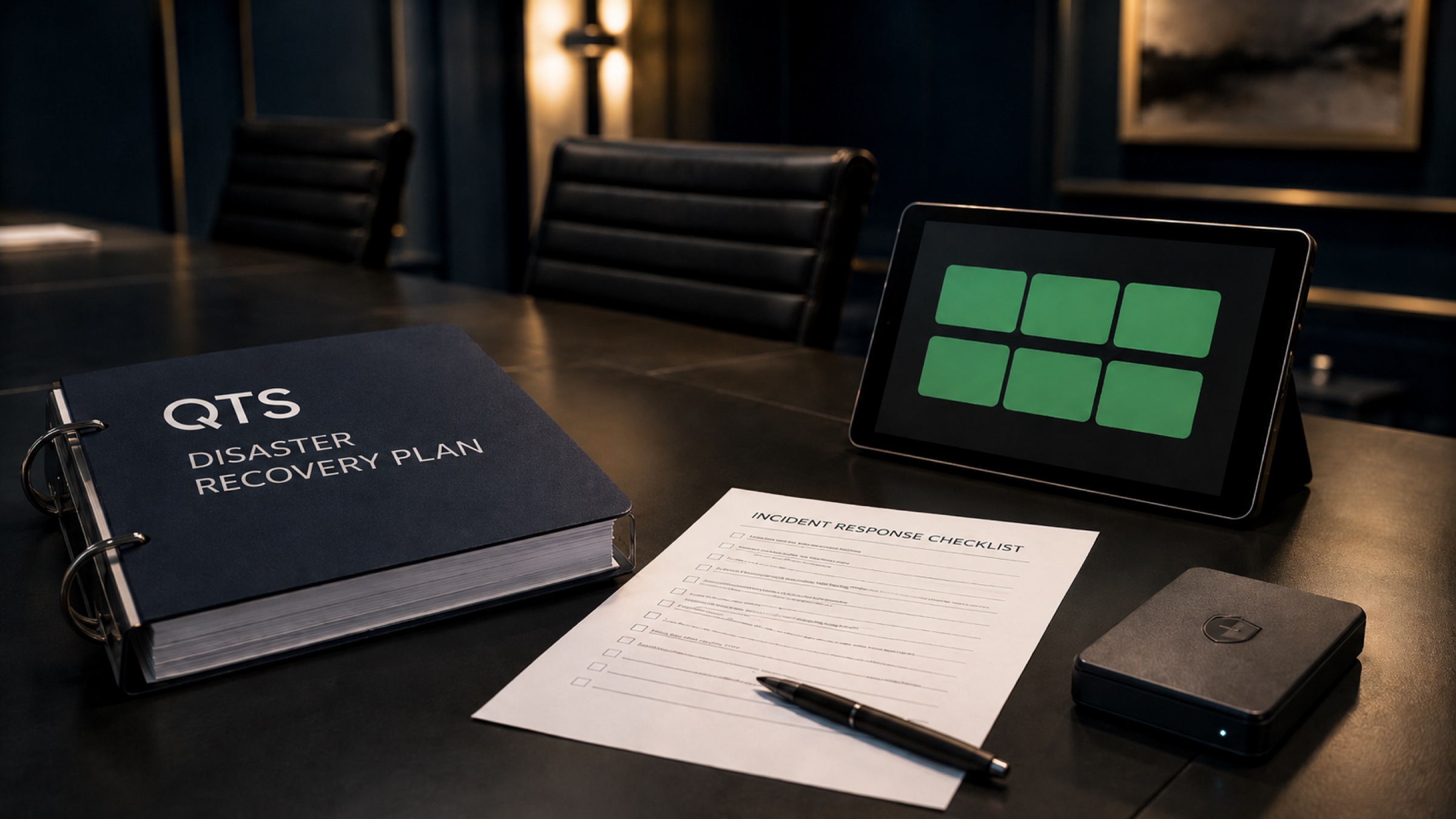
A completed backup job confirms that information was copied. It does not prove that every system, application, dependency, and recovery procedure will work when the organization needs them.
QTS performs recovery testing to verify that protected data and eligible systems can be restored and to identify weaknesses before a real incident occurs.
Backup verification
We review backup activity and investigate failed, incomplete, or overdue protection jobs.
Restore testing
We test the restoration of selected files, systems, or workloads according to the agreed service scope.
Recovery procedures
We document the steps, responsibilities, dependencies, and recovery order required during an incident.
Corrective action
Testing results are reviewed and weaknesses are addressed before the organization has to depend on the recovery plan.
Recovery testing is performed according to the systems protected, agreed service level, and approved testing schedule.
Recovery Readiness
Could Your Business Recover Today?
Tell us what your organization depends on, how it is currently protected, and when recovery was last tested.
QTS will help identify obvious weaknesses, clarify recovery priorities, and recommend the most practical next step.